

Rolling and conveying production systems rely on stable, consistent rotational movement to process materials accurately. Even tiny irregular vibrations can amplify over time during continuous high-speed operation. Unlike sudden equipment breakdowns, vibration damage accumulates quietly, gradually wearing down internal components and loosening structural connections.
Uncontrolled vibration directly affects material processing precision, leading to uneven material thickness, surface defects, and inconsistent finished product quality. It also accelerates wear on bearings, shafts, and sealing parts, shortening the overall service cycle of core equipment. In severe cases, excessive vibration triggers automatic equipment alarms, forcing unplanned line shutdowns and cutting daily production output significantly.
Standard Vibration Tolerance Parameters for Industrial Roller Equipment
To effectively identify abnormal vibration and implement accurate improvements, factory technicians need clear industry-standard reference data. The table below lists universal vibration tolerance values, operating thresholds, and corresponding failure impacts for industrial roller equipment, providing reliable guidance for daily inspection and maintenance work.
Operating Parameter | Normal Vibration Range | Abnormal Threshold Value | Typical Operational Impact |
|---|---|---|---|
Low-Speed Operation (Below 300 RPM) | 0.5 – 1.2 mm/s | Above 1.8 mm/s | Slow component loosening, minor processing deviation |
Medium-Speed Operation (300–600 RPM) | 1.2 – 2.0 mm/s | Above 2.8 mm/s | Obvious equipment shaking, reduced product flatness |
High-Speed Operation (Above 600 RPM) | 2.0 – 2.5 mm/s | Above 3.2 mm/s | Severe vibration, frequent alarm triggering |
Long-Term Continuous Operation | Stable vibration with no fluctuation | Periodic vibration surges | Accelerated internal part fatigue and wear |
Any vibration value that exceeds the standard range or shows irregular fluctuations indicates abnormal internal operation. Timely troubleshooting and adjustment are essential to prevent cumulative equipment damage.
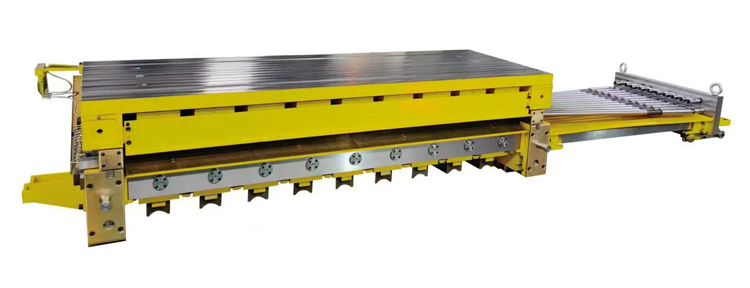
Root Causes of Vibration in Roller Box Units
1. Internal Component Wear and Clearance Deviation
Long-term continuous operation inevitably causes slight wear on internal bearings, shafts, and bushing parts. When component clearance exceeds the designed tolerance range, rotational operation loses balance, producing regular vibration. This is the most common cause of low-intensity, persistent vibration in aging equipment.
2. Uneven Installation and Structural Misalignment
Installation accuracy directly determines operational stability. Asymmetric mounting angles, inconsistent horizontal levels, and misaligned connecting shafts will cause unbalanced stress during rotation. Even brand-new equipment will produce obvious vibration if installed improperly, affecting the entire production line’s operational stability.
3. Overloaded Operation and Uneven Material Load
Many production lines pursue high output and operate under long-term overload conditions. Excessive material stacking or uneven feeding causes asymmetric load on roller components. The unbalanced pressure generates continuous vibration during high-speed rotation, which gradually loosens fixed bolts and worsens structural instability.
4. Dust Residue and Lubrication Failure
Production workshop dust and material debris easily accumulate inside equipment, causing uneven rotational resistance. Meanwhile, deteriorated or insufficient lubrication increases internal friction, creating irregular vibration and noise during equipment operation.
Practical Solutions to Reduce Roller Box Vibration
Based on actual on-site operation experience, most vibration problems can be completely resolved through standardized maintenance and operational optimization without expensive part replacement or equipment upgrades.
First, conduct regular precision calibration for equipment installation levels and shaft alignment to eliminate structural misalignment errors, ensuring balanced stress during rotation. Second, strictly control feeding volume and avoid long-term overload operation, keeping the equipment running within the rated load range to maintain stable rotational balance.
Third, arrange regular internal cleaning and lubricant replacement to remove residual dust and debris, ensuring smooth internal operation and uniform friction. Finally, inspect wearing parts regularly and replace aging bearings and bushings in a timely manner to keep internal clearance within the factory design standard.
Frequently Asked Questions
1. Is slight vibration during equipment operation normal?
Yes, tiny vibration exists in all rotating equipment and belongs to a normal physical phenomenon. Vibration is only problematic when it exceeds the standard threshold, fluctuates irregularly, or gradually intensifies during continuous operation.
2. How often should vibration calibration be performed on production equipment?
For production lines operating 8–12 hours daily, professional vibration detection and level calibration are recommended every three months. For high-speed, heavy-duty workshops, monthly inspection is ideal to maintain long-term stability.
3. Can long-term vibration cause permanent equipment damage?
Absolutely. Sustained unbalanced vibration will continuously impact internal precision parts, expanding component clearance and loosening fixed structures. Long-term neglect will lead to irreversible structural deformation and premature equipment scrapping.
4. Will lubrication upgrades effectively reduce equipment vibration?
Proper lubrication can reduce friction vibration caused by dry operation and uneven resistance. However, it cannot solve vibration problems caused by structural misalignment, part wear, or overload operation, which require targeted calibration and replacement.
 Contact person:Mr.Wu
 Phone:+86 18602539156
 Email:wuqi231138@126.com
This website uses cookies to ensure you get the best experience on our website.
 Español
 Pусский
 Indonesia
 Tiếng Việt


Comment
(0)