

If you work with metal sheets, you know flatness and consistency make or break your final parts. Bent, warped, or stress‑prone sheets lead to scrap, rework, and missed tolerances. A straightening roller solves these problems in real production lines—and we’re breaking down exactly how it works, why it matters, and what results you can expect.
What Is a Straightening Roller and How Does It Work?
A straightening Roller is a precision‑engineered component used in roller leveling machines to correct flatness defects and reduce residual stress in metal sheets. As sheets pass through staggered, rotating rollers, controlled bending and pressure reshape the material layer by layer. This process eliminates internal stresses that cause warping, twisting, or unevenness after cutting, bending, or welding.
The straightening roller uses elastic‑plastic deformation: outer layers enter plastic deformation to hold a new shape, while inner layers stay elastic to avoid cracking. When the sheet exits the final roller, springback is minimal and predictable—leaving a consistently flat, dimensionally stable workpiece.
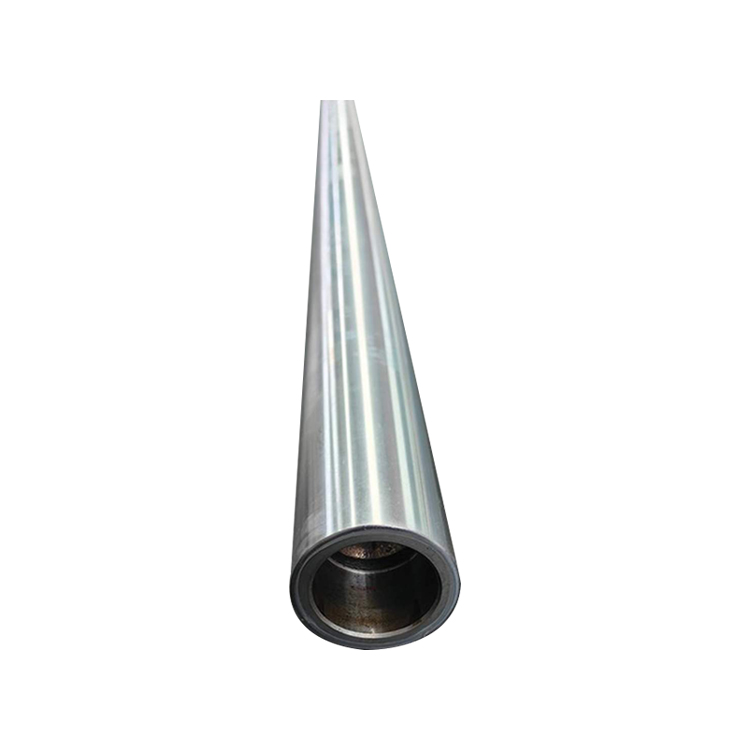
Key Technical Parameters of Precision Straightening rollers
The table below shows typical industrial specifications that directly affect processing accuracy. These values are widely used in automotive, aerospace, and sheet metal fabrication.
| Parameter | Standard Range | Precision Impact |
|---|---|---|
| Roller Material | Alloy steel, hardened to HRC 58–62 | Wear resistance; consistent pressure long‑term |
| Roller Diameter | 60–180 mm | Contact area; pressure distribution |
| Number of Rollers | 7–19 rolls | Progressive correction; lower residual stress |
| Adjustable Gap | 0.5–20 mm | Matches sheet thickness for ideal deformation |
| Straightness Accuracy | ±0.02–0.1 mm/m | Meets tight tolerance for high‑end parts |
| Surface Finish | Ra ≤ 0.8 μm | Prevents scratching; preserves surface quality |
How the Straightening Roller Delivers Higher Processing Precision
1. It Eliminates Residual Stress for Stable Parts
Raw and processed sheets often hold hidden residual stress from rolling, cutting, or heat treatment. A straightening roller redistributes that stress evenly across the material. Without this step, sheets distort during later operations—ruining hole positions, bend angles, and assembly fit. The straightening roller removes this variability at the source.
2. It Provides Uniform Pressure Across the Sheet Width
Uneven pressure creates waves, curls, or edge lift. Precision‑ground straightening roller sets maintain parallelism and consistent contact across the full sheet width. This uniformity ensures every section of the sheet gets the same correction—critical for large panels and high‑volume production.
3. It Reduces Springback and Improves Predictability
Metal springback ruins accuracy in bending and forming. The straightening roller preconditions the sheet with controlled, repeated reverse bending. This lowers final springback to a known, small value. Engineers can set tools and programs with confidence, cutting trial‑and‑error time.
4. It Protects Material Integrity and Surface Quality
Modern straightening roller surfaces are precision‑ground and hardened to avoid marking, scratching, or work‑hardening delicate alloys. For aluminum, stainless, and electrical steels, this means better surface quality and fewer rejected parts due to cosmetic or structural damage.
Frequently Asked Questions About Straightening Roller and Precision
Q1: Can a straightening roller fix severely warped thick metal sheets?
Yes. With the right roller diameter, spacing, and pressure settings, a straightening roller corrects moderate to severe warpage in sheets up to 20 mm thick. Heavier rollers and slower feed rates improve results for high‑strength materials.
Q2: Does using a straightening roller affect material hardness or strength?
When set correctly, it improves dimensional stability without lowering effective strength. It relieves internal stress rather than weakening the material. Over‑pressure can cause surface damage, but proper calibration avoids this issue entirely.
Q3: How long does a precision straightening roller last?
With daily maintenance and proper lubrication, a hardened alloy straightening roller lasts 1–3 years in continuous production. Lifespan depends on material abrasiveness, daily runtime, and alignment checks. Worn rollers should be reground or replaced to hold precision.
Q4: Is a straightening roller worth it for small fabrication shops?
Absolutely. Even small shops see fewer rejects, faster setup, and more consistent parts. A compact straightening machine with a quality straightening roller quickly pays for itself in reduced material waste and higher customer satisfaction.
Real‑World Benefits in Production
Fabricators using a precision straightening roller report:
30–60% fewer scrap parts
Tighter tolerances held batch after batch
Faster setup for laser cutting, bending, and stamping
Less assembly adjustment and rework
Longer tool life due to stable, flat sheet feeding
The straightening roller isn’t just a “nice‑to‑have”—it’s a core component for reliable, high‑precision metal sheet processing.
 Contact person:Mr.Wu
 Phone:+86 18602539156
 Email:wuqi231138@126.com
This website uses cookies to ensure you get the best experience on our website.
 Español
 Pусский
 Indonesia
 Tiếng Việt


Comment
(0)