

Metal processing plants rely heavily on steady straightening accuracy to produce qualified flat steel, metal strips and custom profiles. The Roller box serves as a core wearable component for straightening equipment, supporting round-the-clock high-speed rolling and repetitive metal shaping work. For procurement and equipment management teams, choosing the right part has always been a tricky challenge. The current market is packed with suppliers offering vastly different pricing, quality standards and service packages. Many facilities opt for the cheapest options to cut immediate costs, only to face recurring issues like mechanical jams, inconsistent straightening results, oil leaks and premature part failure — all of which drive up long-term operational spending significantly.

A properly fitted and durable Straightening machine roller is key to maintaining consistent production precision and avoiding costly unplanned downtime. That said, true cost efficiency never comes from rock-bottom upfront prices alone. With metal fabrication standards growing more rigorous and factory equipment running longer shifts in 2026, buyers need practical, field-tested methods to filter trustworthy suppliers. This hands-on purchasing guide shares actionable industry standards to help plant managers and procurement teams pick high-value Roller boxes amid crowded and inconsistent market choices.
Why Roller Box Quality Determines Straightening Line Profitability
Straightening machines operate under continuous high-load friction and pressure. The roller box bears the main rolling force, ensuring stable rotation and precise positioning during metal shaping. Low-quality units usually adopt thin castings, unpolished internal structures, and inferior bearing configurations. Although they save initial procurement costs, they fail quickly under long-shift production.
Substandard roller boxes cause many invisible production losses. Unstable rotation leads to inconsistent flatness of finished metal products, increasing defective rates. Poor sealing design results in dust accumulation and oil leakage, contaminating workshop environments and requiring frequent maintenance. For medium and large processing plants, unplanned downtime caused by faulty roller boxes is far more costly than the price difference between high-quality and low-cost products.
Therefore, experienced equipment managers always evaluate comprehensive value rather than focusing solely on quotation figures. A cost-effective roller box must balance stable structural quality, low maintenance frequency, and reliable after-sales support.
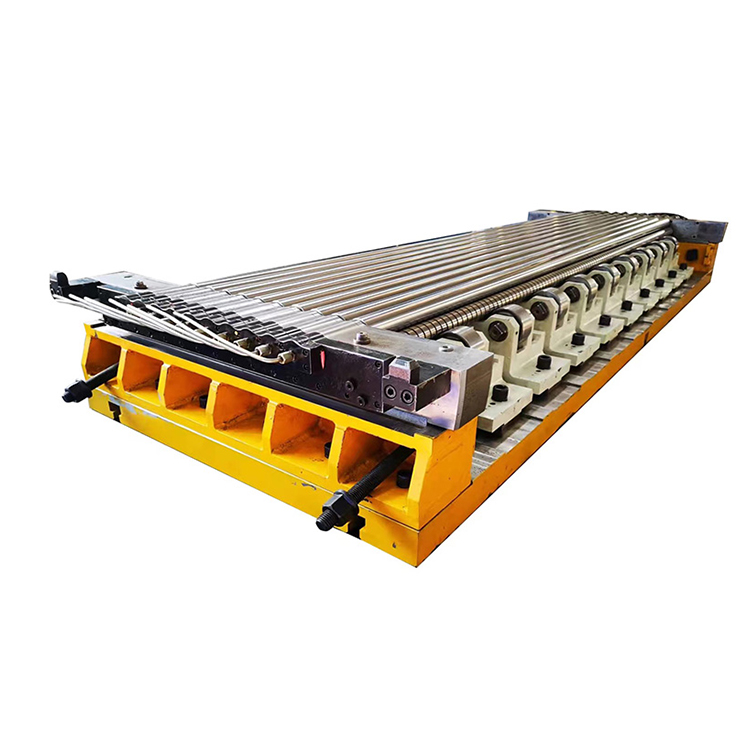
Core Criteria to Screen Cost-Effective Roller Box Suppliers
When comparing multiple suppliers, buyers should focus on five core dimensions that directly affect service life and operational stability. These practical standards help eliminate unqualified manufacturers and filter truly cost-effective products.
1. Structural Material and Manufacturing Precision
The overall rigidity and wear resistance of a roller box depend entirely on its casting material and machining precision. Reliable suppliers adopt high-strength cast iron or alloy steel integrally cast housings, which feature strong compression resistance and anti-deformation performance. After long-term high-pressure rolling, the box body remains stable without distortion or displacement.
In contrast, low-cost products use recycled materials or thin welded structures. These structures are prone to deformation after several months of operation, causing roller misalignment and affecting straightening accuracy. Professional manufacturers also apply fine finishing and strict dimensional calibration to ensure internal bearing positions and assembly gaps meet industrial standards, avoiding jitter and abnormal noise during operation.
2. Internal Configuration and Wear Resistance Design
The internal bearing, sealing system and lubrication structure are key factors that decide the roller box’s service life. High-quality configurations adopt precision bearings with strong load capacity, paired with multi-layer dust-proof and oil-proof sealing rings. This design effectively isolates workshop dust and metal debris, preventing internal abrasion and oil leakage.
Regular suppliers optimize internal oil circuit layouts to ensure uniform lubrication during continuous high-speed operation, reducing friction loss and component aging. Buyers should avoid products with simplified internal structures. Although these items are cheap, their poor wear resistance leads to frequent part replacement and raises overall operating costs.
3. Transparent Pricing and Complete Quotation Breakdown
Many buyers encounter hidden costs when cooperating with irregular suppliers. Some manufacturers offer ultra-low initial quotes but charge extra fees for processing fees, packaging fees, freight, and technical guidance. Formal and reputable suppliers provide detailed, itemized quotations with clear pricing compositions, no hidden charges, and standardized settlement terms.
To judge cost performance correctly, buyers need to calculate the total cost of ownership instead of the unit price alone. Products with slightly higher purchase prices often have longer service cycles and lower maintenance costs, delivering better long-term economic benefits.
4. Quality Inspection and Batch Consistency
Stable batch quality is crucial for long-term equipment operation. Excellent suppliers implement strict factory inspection processes, including dimensional tolerance testing, load pressure testing, and sealing performance testing. They can provide complete inspection reports and material certificates to prove product compliance.
Small workshops usually lack standardized testing equipment. Their products have unstable quality differences between batches, which may cause equipment adaptation failures after replacement. For factories with continuous production needs, choosing suppliers with standardized quality control systems can effectively reduce operational risks.
5. Delivery Cycle and After-Sales Support
Production continuity is the core of factory profitability. Reliable suppliers have standardized production schedules and sufficient spare parts inventory, ensuring timely delivery and avoiding production line shutdowns caused by delayed supplies. Meanwhile, professional after-sales service is an indispensable part of cost performance.
Formal manufacturers provide installation guidance, technical debugging, and warranty maintenance services. When equipment fails, they can respond quickly to solve problems and reduce downtime losses. Suppliers that only focus on sales without after-sales support often lead to long-term maintenance troubles for factories.
2026 Practical Purchasing Tips for Factory Buyers
In 2026, the metal processing industry continues to upgrade production precision requirements, and the market gap between high-quality and low-end roller box products is gradually widening. When purchasing, small and medium-sized factories should abandon the "ultra-low price first" mindset and focus on matching product performance with actual working conditions.
For conventional low and medium-load straightening production, standard industrial-grade roller boxes can fully meet operational needs and achieve optimal cost performance. For high-speed, high-precision, and heavy-load production lines, it is recommended to choose enhanced wear-resistant models to reduce frequent replacement frequency. In addition, buyers can verify supplier strength through sample testing, factory video inspections, and customer case reviews to avoid unqualified products.

Frequently Asked Questions (FAQs)
Q1: What problems will inferior roller boxes cause in straightening production?
A: Low-quality roller boxes are prone to body deformation, bearing jamming, oil leakage and unstable rotation. These issues lead to uneven metal straightening precision, increased defective products, and frequent equipment failures, seriously affecting continuous production efficiency.
Q2: Is expensive roller box necessarily better in industrial applications?
A: Not exactly. High cost does not equal high matching degree. Factories only need to select industrial-grade products that match their load capacity, operating speed and production environment. Excessively high-end configurations cause cost waste, while blindly pursuing low prices brings hidden operational risks.
Q3: How to quickly judge a supplier’s product quality credibility?
A: Buyers can check complete material certificates, factory inspection reports, and real industrial application cases. Standardized suppliers with mature production processes and stable batch quality are always more reliable than small workshops with vague parameter descriptions.
Q4: Why is total cost of ownership more important than unit price?
A: Ultra-low-priced products have short service life and high maintenance costs, requiring frequent replacement and causing downtime losses. Products with moderate prices and stable quality have longer service cycles and lower comprehensive consumption, bringing higher long-term cost performance.
Anyone with hands-on experience in metal processing knows that buying roller boxes is far more than routine spare parts procurement. It directly impacts daily production stability, product yield and long-term cost control. With countless suppliers offering mixed-quality products across the market, the biggest mistake buyers make is judging value by price tag alone. Instead, it pays to evaluate every option holistically, checking material build, structural design, batch consistency, delivery reliability and after-sales support before finalizing orders.
As the metal processing industry continues to upgrade its quality and precision requirements in 2026, low-maintenance, high-stability mechanical components have become the go-to choice for modern standardized production lines. By adopting practical industrial screening standards and avoiding impulsive low-cost purchases, factories can cut down on frequent equipment failures, keep straightening precision stable, and achieve lasting cost savings and production efficiency improvements for daily operations.
 Contact person:Mr.Wu
 Phone:+86 18602539156
 Email:wuqi231138@126.com
This website uses cookies to ensure you get the best experience on our website.
 Español
 Pусский
 Indonesia
 Tiếng Việt


Comment
(0)