

Conveyor systems rely heavily on stable rotating parts to maintain consistent material transportation. A Roller box serves as a core supporting component for conveyor Rollers, fixing roller positions and bearing continuous material load during daily operation. Uncontrolled vibration during initial installation does not only affect conveying stability but also triggers roller wear, structural loosening and material deviation. Reasonable installation adjustment is the most effective way to eliminate early vibration faults.
Main Causes of Vibration in Newly Installed Roller Equipment
Many people assume that new equipment is free of quality issues, so vibration must be caused by long-term wear. In fact, most vibration problems of new conveyor components stem from non-standard installation rather than component aging. Small errors in levelness, parallelism and gap coordination will be amplified during high-speed rotation, forming continuous mechanical vibration.
In addition, inconsistent foundation flatness, uneven locking force of fasteners and minor roller eccentricity will lead to unbalanced operation status. These subtle installation deviations are difficult to observe visually but will continuously affect the overall stability of the conveyor line.
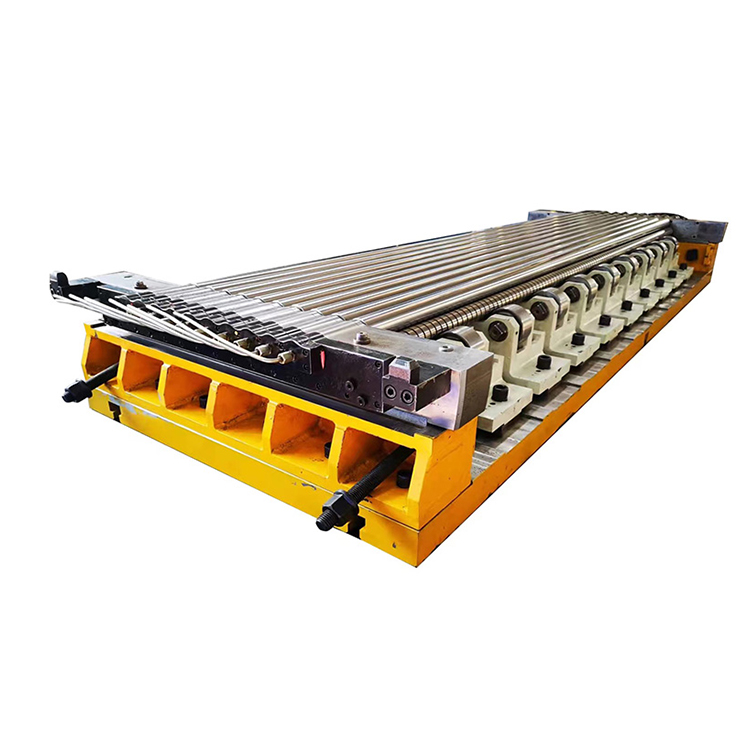
Key Installation Adjustments to Eliminate Vibration
1. Correct Base Leveling and Positioning
Levelness is the basic premise for stable operation. Before fixing the equipment base, operators need to calibrate the horizontal level of the installation area. Uneven foundation will cause the overall stress tilt of the roller box, resulting in periodic shaking during roller rotation. Fine leveling adjustment can balance the overall stress structure and effectively reduce low-frequency vibration.
2. Strict Parallelism and Spacing Calibration
Multiple groups of conveying components need to maintain accurate parallel spacing. Disordered spacing and deflection angles will cause inconsistent roller stress and friction difference. When the conveyor runs at a constant speed, unbalanced friction will produce regular vibration and even cause material sliding and deviation. Standard calibration ensures uniform stress of each rotating unit.
3. Symmetric Fastener Locking Operation
Asymmetric locking of bolts is one of the most easily overlooked causes of vibration. One-sided excessive locking will lead to local structural deformation and uneven assembly gaps. During continuous operation, the deformed structure will produce periodic jitter. Adopting symmetric and graded locking methods can maintain uniform assembly tightness and eliminate vibration caused by gap deviation.
Standard Installation Tolerance Parameters for Vibration Control
The following parameter table lists industry-recognized installation tolerance standards for conveyor roller supporting structures. Controlling all indicators within the safe range can greatly reduce installation vibration and improve long-term operation stability.
Inspection Item | Qualified Installation Tolerance | High-Risk Deviation Range | Vibration Improvement Effect |
|---|---|---|---|
Installation Base Levelness | ≤ 0.5mm per meter | ≥ 1.0mm per meter | Eliminates overall tilt vibration |
Roller Parallelism Deviation | ≤ 0.8mm | ≥ 1.5mm | Reduces friction unbalance vibration |
Fastener Locking Torque Error | ±5% torque difference | ≥10% torque difference | Avoids local structural deformation |
Roller Radial Runout | ≤ 0.3mm | ≥ 0.6mm | Controls high-speed rotation jitter |
Long-Term Benefits of Vibration-Free Installation
1. Extend Equipment Service Life
Long-term micro-vibration will cause continuous fatigue loss of structural parts, accelerate bearing wear and loosen fixed parts. Standard vibration-reducing installation can stabilize equipment operation state, reduce mechanical fatigue loss, and effectively extend the service cycle of the whole conveyor structure.
2. Stabilize Conveying Accuracy
Vibration is the main cause of material deviation, sliding and stacking. Stable and balanced operation ensures uniform material transportation, improves production consistency, and reduces material waste and sorting errors caused by jitter.
3. Reduce Daily Maintenance Frequency
Vibration-induced faults such as loose bolts, abnormal noise and partial wear account for most daily maintenance work. Optimizing installation quality at the initial stage can greatly reduce later troubleshooting and maintenance pressure, saving operational costs.

FAQs About Roller Box Installation and Vibration Reduction
1. Why does new roller box installation still produce obvious vibration?
New equipment vibration is mostly caused by installation deviation rather than component damage. Unlevel base, poor parallelism and uneven bolt locking will all lead to unbalanced rotation, resulting in obvious jitter and noise during operation.
2. Can minor installation deviation cause long-term equipment vibration?
Yes. Tiny deviations will be continuously amplified during long-term high-speed operation. Minor unbalance will gradually evolve into structural loosening and eccentric wear, forming fixed vibration faults that are difficult to eliminate in the later stage.
3. What is the fastest way to judge installation vibration causes?
Check base levelness first, then test roller parallelism and fastening uniformity. Most installation vibration problems can be solved by recalibrating these three core indicators without replacing any parts.
4. Is regular inspection necessary after vibration reduction installation?
Yes. After the new equipment runs for 100 to 200 hours, secondary fastening and calibration are required to eliminate running-in gaps, maintaining long-term vibration-free stable operation.
 Contact person:Mr.Wu
 Phone:+86 18602539156
 Email:wuqi231138@126.com
This website uses cookies to ensure you get the best experience on our website.
 Español
 Pусский
 Indonesia
 Tiếng Việt


Comment
(0)