

Steel mill heavy-load production features long-hour continuous operation, ultra-high rolling pressure and repeated mechanical impact. Unlike ordinary industrial Rollers, rollers used in rolling mills need to balance surface hardness and internal toughness. Pure high hardness without toughness will cause cracking under heavy impact, while excessive toughness with low hardness leads to rapid surface wear and peeling.
A professional support roll serves as the key auxiliary load-bearing component in rolling systems, sharing most of the rolling pressure for work rolls. Its stable hardness directly determines the overall bearing capacity and service life of the rolling equipment. For heavy-load scenarios such as thick plate rolling and high-frequency continuous rolling, standardized hardness matching is the primary factor to avoid component failure and production loss.
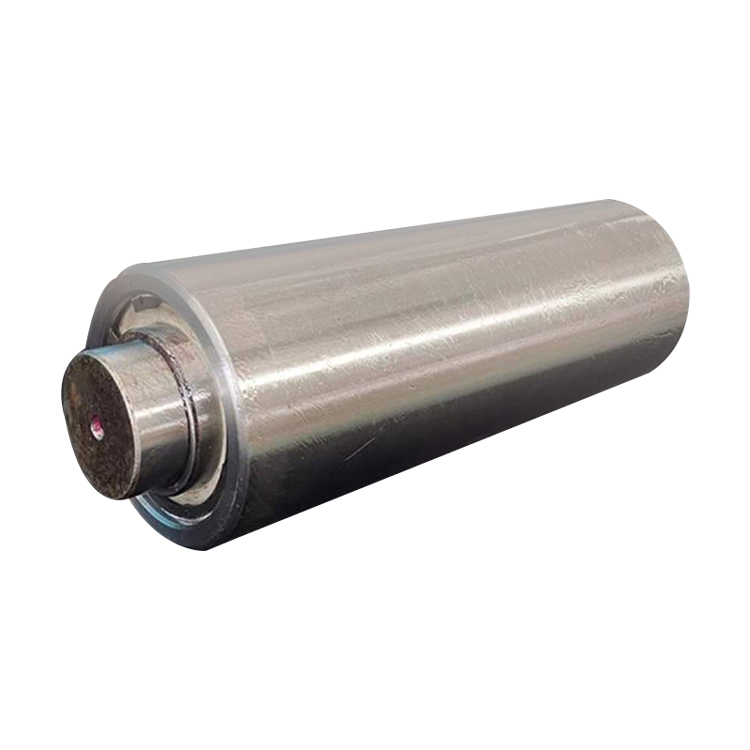
Standard Hardness & Performance Parameters for Heavy-Load Support Roll
To help mill buyers and equipment managers make accurate selection decisions, we sorted out industry-standard parameters summarized from professional roller manufacturers and long-term steel mill operation data. These authoritative indicators cover hardness, tolerance and load performance, providing reliable data support for bulk procurement and equipment matching.
Performance Parameter | Heavy Load Standard Value | Practical Industrial Effect |
|---|---|---|
Roll Body Hardness | HS 60 – 65 | Resists heavy pressure wear and surface peeling in continuous rolling |
Hardness Uniformity Error | ≤ 5HS Within Full Roll Body | Ensures consistent rolling force and uniform steel plate thickness |
Roll Neck Hardness | HS 42 – 50 | Prevents neck fracture while maintaining excellent overall toughness |
Running Runout Tolerance | ≤ 0.03mm | Reduces equipment vibration and improves finished steel flatness |
Max Bearing Rolling Pressure | 2500 – 3500MPa | Adapts to thick plate heavy-load rolling and long-hour operation |
Key Selection Tips for High Hardness Support Roll in Steel Mills
1. Match Hardness Gradient with Actual Rolling Load
Many purchasing teams simply pursue ultra-high hardness while ignoring hardness gradient design. Qualified heavy-load rollers adopt differential hardness design: higher surface hardness for wear resistance and moderate core hardness for impact resistance. For conventional medium plate rolling, HS60-HS62 surface hardness fully meets demands; for ultra-thick plate heavy rolling, HS63-HS65 high hardness configuration is required to resist extreme pressure wear.
2. Verify Material Forging & Heat Treatment Process
Stable hardness completely depends on standardized forging and integral heat treatment. High-quality rollers adopt integral forging molding and overall quenching and tempering process, ensuring uniform internal metallographic structure. Inferior products often use partial heat treatment, resulting in uneven hardness, local stress concentration and easy cracking during heavy-load operation.
3. Prioritize Hardness Uniformity Over Single Hardness Value
A single high hardness data cannot represent overall performance. The whole roll body must maintain uniform hardness distribution with an error below 5HS. Unbalanced hardness will cause inconsistent rolling friction, leading to steel plate thickness deviation, surface stripes and other quality defects, greatly increasing product scrap rate.
4. Check Dimensional Tolerance & Assembly Accuracy
High hardness performance can only be exerted on the basis of precise assembly. Standard heavy-duty rollers strictly control running runout within 0.03mm. Excessive tolerance will cause eccentric operation, increase local rolling pressure, accelerate partial wear of the support roll, and eventually lead to early failure of the whole component.

FAQs About High Hardness Support Roll Selection
1. Why does hardness uniformity matter more than single hardness data?
Single hardness only reflects local performance, while overall uniformity determines long-term rolling stability. Uneven hardness causes inconsistent friction and pressure during operation, resulting in unqualified steel flatness and thickness. It also leads to partial over-wear, shortening the overall service cycle of the roller.
2. What hardness range is most suitable for heavy-load steel plate rolling?
For most heavy-load hot rolling and medium-thick plate rolling lines, HS60 to HS65 surface hardness is the optimal range. This interval perfectly balances wear resistance and impact toughness. Too low hardness causes rapid surface wear, while excessive hardness reduces toughness and brings cracking risks under repeated heavy impact.
3. Can high hardness rollers adapt to long-hour continuous production?
Yes, high-quality high hardness rollers with standardized heat treatment can support 24-hour continuous industrial operation. Stable hardness and uniform internal structure effectively resist fatigue wear and thermal stress. Matching with correct daily maintenance, it can maintain stable performance for a long time and reduce frequent replacement downtime.
4. What failures are caused by unqualified roller hardness?
Unqualified hardness mainly leads to three typical failures: surface peeling and wear due to insufficient hardness, roll body cracking caused by poor toughness from excessive hardness, and unstable rolling quality caused by uneven hardness. All these problems will directly increase production costs and reduce finished product qualification rate.
 Contact person:Mr.Wu
 Phone:+86 18602539156
 Email:wuqi231138@126.com
This website uses cookies to ensure you get the best experience on our website.
 Español
 Pусский
 Indonesia
 Tiếng Việt


Comment
(0)