

For modern metal strip rolling lines, choosing a high-performance Spiral intermediate roller is not just about picking a tough surface finish. It requires matching material grades, surface treatment processes, and dimensional accuracy to your specific rolling materials and line speed. A well-selected wear-resistant Roller can eliminate most strip flatness issues and reduce routine replacement frequency significantly.
Why Wear Resistance Is the Top Priority for Rolling Line Rollers
Metal strip rolling is a continuous high-friction industrial process. Rollers are constantly in contact with steel, aluminum, or copper strips under stable pressure and fast linear speed. Over time, surface abrasion, micro-indentations, and uneven wear will form on ordinary rollers.
These subtle surface changes directly transfer to the metal strip, resulting in poor flatness, surface scratches, and inconsistent thickness. For mass production lines, even minor roller wear can lead to batches of defective products, raising scrap rates and lowering overall production efficiency.
A professionally customized and wear-resistant spiral intermediate roller solves these pain points fundamentally. With upgraded material hardness and anti-wear surface treatment, it maintains stable surface flatness during long-term continuous operation, ensuring uniform strip quality throughout long production cycles.
Core Wear-Resistant Selection Parameter Table
Many buyers judge roller quality only by surface appearance, which leads to wrong selections. Wear resistance depends on standardized technical parameters rather than visual effects. The table below lists key industry criteria for selecting high-quality rolling line rollers, providing reliable data support for bulk procurement and equipment upgrading.
Parameter Item | Industrial Standard Value | Production Benefit |
|---|---|---|
Roller Surface Hardness | HRC 55–62 | Resists continuous friction and micro-indentation deformation |
Surface Roughness | Ra 0.2–0.4μm | Ensures smooth strip surface without scratching |
Dimensional Runout Tolerance | ≤0.01mm | Guarantees uniform rolling pressure and strip flatness |
Common Surface Treatment | Hard chrome plating / Thermal spraying | Greatly extends anti-wear service cycle |
Applicable Line Speed | 0–120m/min | Matches most conventional medium and high-speed rolling lines |
Rollers that meet the above parameter standards show far better anti-wear performance than ordinary models. They can keep stable working conditions for a long time under continuous rolling friction, effectively reducing replacement frequency and production downtime.
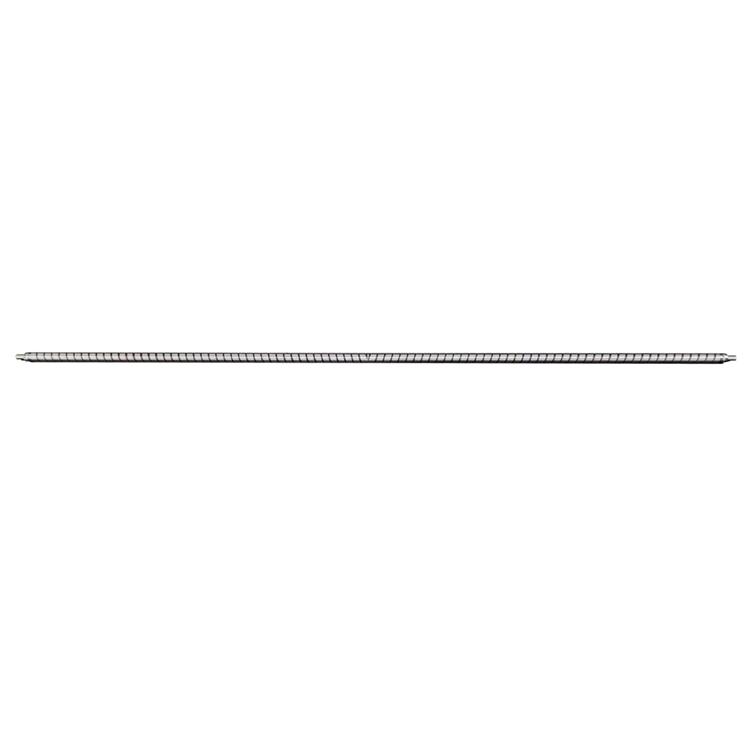
Key Wear-Resistant Selection Criteria for Rolling Applications
When sourcing industrial rollers, material grade is the first core evaluation point. High-quality rollers adopt high-alloy steel base material, which has excellent overall toughness and hardness. Ordinary carbon steel rollers are low in cost but poor in wear resistance, unable to adapt to long-term high-frequency rolling work.
Surface treatment technology determines the actual wear-resistant lifespan. Hard chrome plating and thermal spraying are the two most mature anti-wear processes for rolling equipment. These treatments form a dense protective layer on the roller surface, resisting metal friction and oxidation corrosion, and avoiding rapid surface failure.
In addition, dimensional tolerance accuracy cannot be ignored. Even high-hardness rollers with excessive runout will cause uneven rolling pressure, resulting in local wear deviation and affecting the overall flatness of finished metal strips.
Frequently Asked Questions for Roller Selection
Q1: What type of surface treatment offers the best wear resistance?
Hard chrome plating is suitable for medium-speed conventional rolling lines with balanced cost and performance. Thermal spraying provides higher surface hardness and anti-fatigue ability, ideal for high-speed and heavy-load rolling scenarios that require ultra-long service life.
Q2: How do I know if a roller’s hardness meets industrial standards?
You can require suppliers to provide official hardness test reports. Qualified rolling rollers must maintain a stable HRC 55–62 hardness range. Too low hardness causes quick wear, while excessive hardness may lead to surface peeling under impact load.
Q3: Can wear-resistant rollers adapt to different metal strip materials?
Yes. Standard wear-resistant rollers work well for steel, aluminum, and copper strips. For ultra-thin or high-precision strips, you can adjust surface roughness and hardness parameters to achieve the best rolling effect.
Q4: How long does a qualified wear-resistant roller last in actual production?
Under standard working conditions and regular maintenance, a high-quality roller can maintain stable performance for 8–12 months, which is 2–3 times the service life of ordinary low-cost rollers, greatly reducing overall equipment operating costs.
Practical Procurement Tips for Factory Buyers
For rolling mill procurement teams, it is crucial to avoid simply comparing unit prices. Low-cost rollers lead to frequent replacement, unstable product quality, and continuous production losses, which are far more costly than initial procurement savings.
It is recommended to conduct sample testing before bulk ordering. Verify surface finish, rolling stability and wear resistance in actual production environments, and confirm whether the product matches the line speed and processing materials of your factory.
 Contact person:Mr.Wu
 Phone:+86 18602539156
 Email:wuqi231138@126.com
This website uses cookies to ensure you get the best experience on our website.
 Español
 Pусский
 Indonesia
 Tiếng Việt


Comment
(0)