

In the metallurgical production process, from raw material rolling and plate transportation to finished product straightening and surface treatment, the performance of various transmission and pressure bearing components directly affects production efficiency, product quality, and production line stability. As a core component designed specifically for metallurgical working conditions, the Metallurgical rubber roller, with its excellent wear resistance, impact resistance, elastic buffering, and high temperature resistance, is suitable for complex working conditions such as high temperature, high pressure, and strong wear in metallurgical production. It has become an indispensable and important equipment in fields such as steel and non-ferrous metal processing. It achieves multiple functions such as transmission power transmission, material guidance and pressure bearing, and surface protection through the scientific combination of rubber layer and metal core shaft, providing solid guarantee for the continuous and efficient operation of metallurgical production.
The essence of metallurgical Rubber Rollers is a functional Roller specially designed and manufactured to adapt to extreme industrial environments. The core structure is usually composed of a metal core shaft and an elastic adhesive layer covering it. Metal core shafts, mostly made of steel or alloy materials, provide necessary structural strength, rigidity, and interfaces for connecting with bearings and transmission systems. They are the skeleton of rubber rollers that bear torque and radial loads. The adhesive layer covering it is the key to its functionality. This is not ordinary rubber, but a specially formulated composite material made of rubber. This structure, which combines rigidity and flexibility, enables metallurgical rubber rollers to effectively transmit power and pressure, absorb vibration, compensate for errors, and protect the surface of the plate, achieving precise control of "force" and "shape" in the steel process.
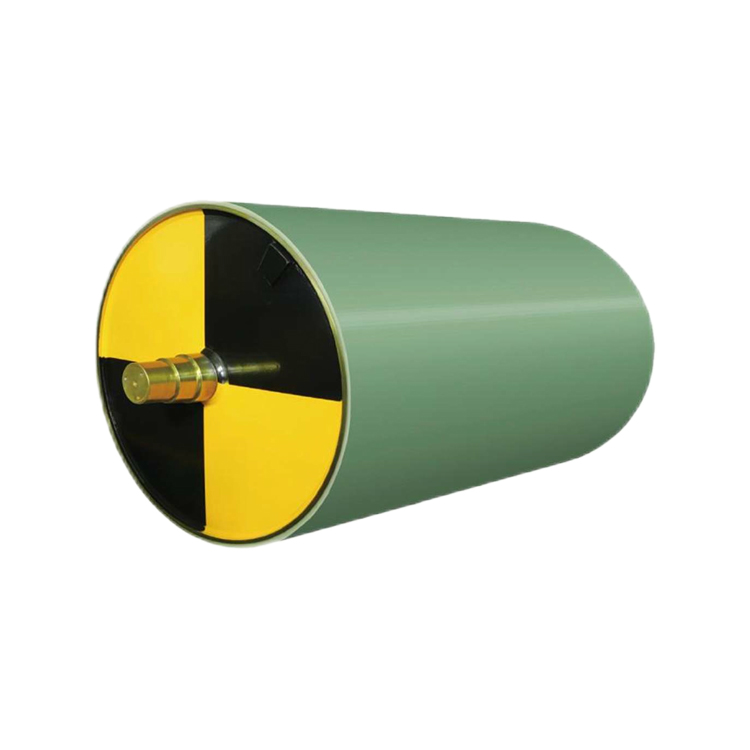
The core structure of a Metallurgical Rubber Roller consists of three parts: a metal core shaft, a transition bonding layer, and a rubber outer layer. Each part works together to balance structural strength and adaptability to working conditions. As the core load-bearing component, the metal core shaft is usually made of high-strength carbon steel, alloy steel and other materials through forging and machining, with sufficient rigidity and compressive strength to withstand the radial and axial loads caused by high-pressure rolling and material impact in metallurgical production, avoiding deformation or fracture of the core shaft. The transition adhesive layer is the key to ensuring a tight bond between the rubber layer and the core shaft. It is treated with a special adhesive through a special process to ensure a firm bond between the two, prevent the rubber layer from falling off or peeling off under high temperature and high pressure conditions, and extend the overall service life of the rubber roller. The rubber outer layer is customized according to the specific metallurgical process requirements, by adjusting the rubber material, hardness, and surface treatment process to adapt to different temperature, pressure, and wear scenarios.
The application of Metallurgical Rubber Roller runs through the entire metallurgical production process and is suitable for various core processes. In the hot and cold rolling processes, it serves as a rolling auxiliary roll and conveyor roll, which not only bears the heat conduction and high-pressure rolling force of high-temperature plates, but also drives the plates to move forward smoothly. The elastic buffering of the rubber layer can reduce the surface indentation of the plates, ensuring uniform thickness and smooth surface of the plates; In the straightening process, the straightening rubber roller corrects the bending and deformation of the board through elastic compression, while avoiding damage to the surface of the board; In surface treatment processes such as pickling and galvanizing, corrosion-resistant rubber rollers can resist the erosion of acidic and alkaline media, achieve smooth transportation and surface cleaning of the sheet, and prevent corrosion spots or scratches on the surface of the sheet; In the finished product winding process, the winding rubber roller relies on uniform pressure transmission to ensure that the coil is tight and neat, avoiding looseness or deformation of the coil.
With the development of metallurgical technology towards higher efficiency, energy conservation, and intelligence, metallurgical rubber rollers are also continuously evolving. Higher production line speeds require rubber rollers to have better dynamic response and fatigue resistance performance; Producing metal products with thinner, higher strength, or special coatings poses new challenges to the surface characteristics and cleanliness of rubber rollers; The increasing demand for environmental protection is driving the development of rubber materials towards low volatility, non-toxic and environmentally friendly direction.

 Contact person:Mr.Wu
 Phone:+86 18602539156
 Email:wuqi231138@126.com
This website uses cookies to ensure you get the best experience on our website.
 Español
 Pусский
 Indonesia
 Tiếng Việt


Comment
(0)