

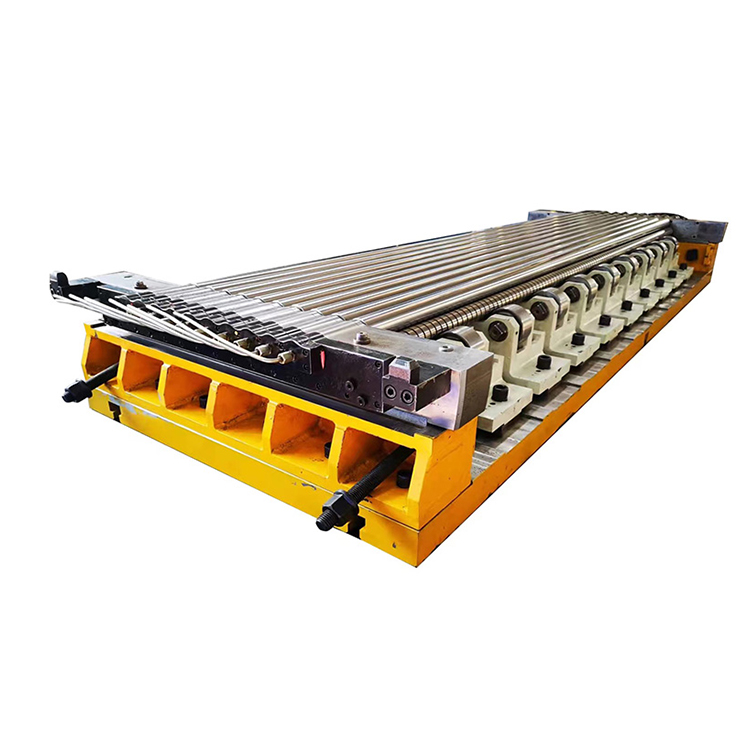
In various scenarios such as industrial production and mechanical processing, the Roller box, as the core component of the equipment transmission and support system, bears the key responsibility of transmitting power and stable operation. Its working state directly determines the operating efficiency, product quality, and production safety of the entire equipment. Under complex working conditions such as high-speed operation, heavy load, and dust erosion for a long time, various components of the Roller box are inevitably prone to wear, aging, deformation, and other problems. If not dealt with in a timely manner, it will not only cause equipment operation to stall and energy consumption to increase, but in severe cases, it may also cause malfunctions and shutdowns, resulting in unnecessary production losses. At this point, Roller box repair becomes the key to solving this problem. By accurately repairing worn parts and scientifically repairing damaged structures, it can effectively restore the original performance of the roller box, extend its service life, ensure that the equipment always maintains an efficient and stable operating state, and provide guarantees for the smooth development of production work.
The starting point of roller box repair lies in precise fault diagnosis and status assessment. This is not just a subjective judgment based on experience, but requires a combination of scientific testing methods. Professional technicians will first conduct a comprehensive disassembly inspection of the problematic roller box, which is a key step in revealing the underlying issues. Every component, from the outer shell and bearing seat to the internal rollers, gears, seals, and various fastening elements, will be separated, cleaned, and carefully inspected one by one. During this process, advanced detection tools such as dial indicators, laser alignment instruments, and 3D coordinate measuring instruments are widely used to accurately measure the wear and deformation of key dimensions. At the same time, through techniques such as magnetic particle inspection and ultrasonic testing, the presence of fatigue cracks or internal damage that are difficult to detect with the naked eye in load-bearing components such as rollers and shafts is investigated, thus comprehensively and objectively evaluating the remaining life and repairability of each component.

The first step in doing a good roller box repair is to accurately identify the type of fault and wear of the roller box, which is the basic prerequisite for subsequent repair work. The core components of the roller box include the roller body, bearings, shaft sleeves, seals, etc. The wear reasons and fault manifestations of different components are different, and they need to be carefully inspected and analyzed one by one. As the main load-bearing component, the roller body is prone to surface wear, scratches, deformation, and even cracks due to long-term contact and friction with materials and other transmission components. These problems can lead to poor rotation of the roller body, which in turn affects the transmission accuracy of the equipment; Bearings are responsible for supporting the operation of the roller body. Under long-term high-speed operation, the internal ball bearings and raceways are prone to wear, rust, or produce jamming and abnormal noise due to insufficient lubrication. In severe cases, it can cause the bearings to jam and cause equipment shutdown; The shaft sleeve plays a buffering and positioning role, and wear can cause excessive clearance between components, resulting in shaking during operation and reducing the stability of the roller box; Damaged seals can cause dust and oil stains to enter the interior of the roller box, exacerbating component wear and shortening the service life of the roller box.
For basic components such as roller box shells, deformation or bearing wear can cause loss of concentricity in the entire transmission system, and repair is particularly important. Professional repair may involve using large floor boring and milling machines or specialized fixtures for precision milling of the shell joint surface, ensuring the flatness and sealing of the joint surface; For worn bearing seat holes, special bushings are inserted after boring, or cold welding processes without thermal stress are used to fill and precision process, in order to restore the standard size and precise coaxiality requirements of the seat holes. All repair processes strictly adhere to the technical specifications of the original equipment drawings, or optimize the design according to equipment upgrade requirements, ensuring that the repaired components achieve or even exceed the initial manufacturing level in geometric accuracy.
 Contact person:Mr.Wu
 Phone:+86 18602539156
 Email:wuqi231138@126.com
This website uses cookies to ensure you get the best experience on our website.
 Español
 Pусский
 Indonesia
 Tiếng Việt


Comment
(0)