

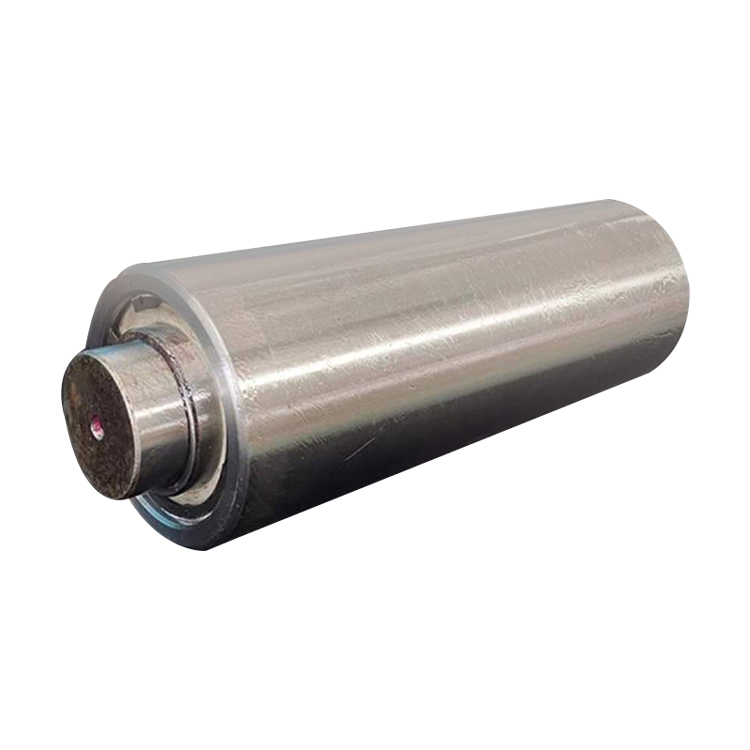
At the beginning of modern steel hot-rolled wide and thick plate and strip production lines, when the hot slab covered with solid oxide scale enters the rolling zone at a high temperature of over a thousand degrees, a key process is waiting for its mission - Scale Breaker Roller. The core equipment that undertakes this mission is the Scale breaking roller. It is not the largest component in the production line, but with its unique structure, materials, and working mechanism, it has become the cornerstone of the process to ensure smooth subsequent rolling processes, improve the surface quality of the final sheet, and reduce roll wear and energy consumption.
The core value of Scale Breaker Roller lies in achieving efficient and uniform removal of metal surface oxide scale through scientific structural design and surface treatment processes, laying a solid foundation for subsequent rolling, pickling, cold rolling, coating and other processes, while protecting processing equipment and product surfaces from damage. Its working principle revolves closely around the pre-processing logic of metal processing. The scale breaking roller is usually installed on the conveyor line before the metal billet enters the subsequent processing process, driven by a driving device to rotate at high speed. When the metal billet passes between two sets of relatively rotating scale breaking rollers at a constant speed, the protruding structure (or rough surface) on the surface of the scale breaking roller will produce strong compression, impact and shear effects on the oxide scale on the metal surface, causing the brittle oxide scale to crack and fall off, thereby exposing the smooth and uniform surface of the metal itself.
The core of the design and manufacturing of the scale breaking roller lies in how to balance strong scale breaking ability and long-lasting self life under extremely harsh working conditions. Its working environment can be described as harsh: direct contact with high-temperature slabs above 1000 ℃, subjected to severe thermal cycling impacts; Continuous friction and impact between the surface and hard and highly abrasive iron oxide scales; The inside of the roller body also needs to be cooled with water to control thermal stress. Therefore, the design primarily focuses on the roller body structure. The geometric shape, size, distribution density, and arrangement of surface protrusions (nail heads or ribs) (such as staggered spiral lines) need to be optimized for stress distribution while ensuring sufficient impact contact points, preventing stress concentration from causing cracking on the roller surface, and promoting effective peeling and detachment of the oxide scale.

Material selection is another major challenge. The roller substrate is usually made of alloy forged steel with high strength, high toughness, and excellent thermal fatigue performance. The roller surface and protruding parts that come into direct contact with high-temperature slab are generally welded or embedded with special alloys such as high chromium cast iron and tungsten carbide composite materials, which have extreme red hardness, wear resistance, and thermal cracking resistance. This composite structure ensures the strength and toughness of the core of the roller to resist bending and torque, while endowing the surface with extraordinary wear and heat resistance. The internal high-efficiency water cooling channel design is used to quickly dissipate the huge heat absorbed by the roller body, maintain the working temperature of the roller body within a safe range, and is the lifeline to prevent deformation or cracking of the roller body due to excessive thermal stress.
The wide adaptability of the Scale breaker roller enables it to meet the oxide skin treatment needs of multiple metal processing fields, becoming an indispensable core component in the metal processing pretreatment process, and promoting efficient and high-quality production in the metal processing industry. In the field of steel processing, scale breaking rollers are widely used in the pretreatment process of hot-rolled steel plates, strips, sections, steel pipes and other products. They can effectively remove the oxide scale on the surface of metal billets, providing a smooth metal surface for subsequent acid pickling, cold rolling, galvanizing, painting and other processes, ensuring the surface quality and coating adhesion of subsequent processed products; In the field of non-ferrous metal processing, scale breaking rollers are used for surface treatment of billets such as aluminum and copper plates, removing oxide scales generated during heating to avoid affecting the surface gloss and processing accuracy of products; In the field of mechanical manufacturing, scale breaking rollers are used for surface pretreatment of various metal forgings and castings, removing surface oxide scales and impurities, laying the foundation for subsequent machining, heat treatment and other processes, and improving the performance and service life of mechanical parts.
 Contact person:Mr.Wu
 Phone:+86 18602539156
 Email:wuqi231138@126.com
This website uses cookies to ensure you get the best experience on our website.
 Español
 Pусский
 Indonesia
 Tiếng Việt


Comment
(0)