

In industrial fields such as metal processing, sheet metal production, and pipe manufacturing, the straightening roller, as the core straightening component, undertakes the important mission of correcting material deformation and ensuring product accuracy. Its performance and operating status directly determine the quality level of the final product and the smoothness of subsequent processing. Whether it is metal profiles such as steel plates, steel pipes, or other processed materials that require flatness and straightness, they are prone to deformation problems such as bending, twisting, and wavy shapes due to uneven stress, temperature changes, and other factors during rolling, transportation, and cooling. If not effectively straightened, it will not only affect the appearance quality of the product, but also lead to subsequent processing being unable to proceed normally, and even cause material waste and production efficiency decline.
The design and configuration of Straightening Rollers is a highly specialized system engineering that closely revolves around the physical properties and process objectives of the material being straightened. The primary determining factor is the properties of the material being straightened, including its material (such as steel, aluminum, copper alloy), thickness, width, yield strength, elastic modulus, and the initial shape defect type of the incoming material. Based on these parameters, engineers need to determine the straightening plan, such as using stretch straightening, pressure straightening, or the more common multi roll bending straightening. In a multi roll straightening machine, the arrangement of the Roller system, roller diameter size, roller spacing, and number of rollers all need to be accurately calculated. The size of the roller diameter should take into account both the stiffness requirements and the bending curvature radius; The roller spacing affects the distribution of bending moment and the straightening effect; The number of rolls determines the number of times the material can withstand repeated bending. Insufficient bending may result in insufficient straightening, while excessive bending may lead to work hardening or increased energy consumption.
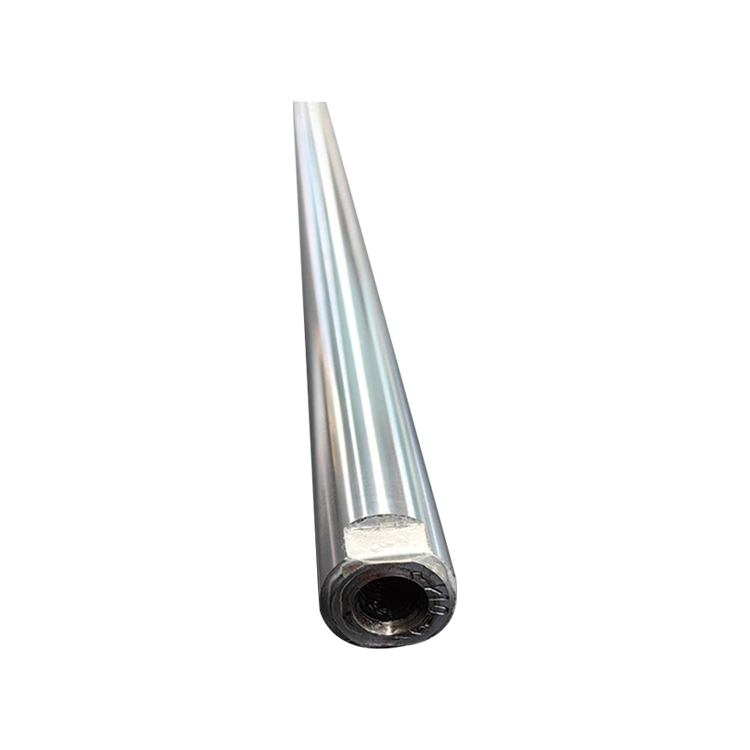
The core function of a straightening roller is to accurately correct deformed materials through its own rotation and pressure, restoring the material to the specified straightness and flatness standards, and meeting the requirements for subsequent processing or finished product use. Unlike ordinary transmission rollers, the design of Straightening rollers focuses more on precision and wear resistance. Their surfaces are usually specially treated to have high hardness and smoothness, which can reduce friction with materials while withstanding high pressure, avoid scratching the material surface, ensure straightening effect, and protect the appearance of the product. According to the type, specification, and degree of deformation of the processing material, the size, material, and arrangement of the straightening roller may also vary. However, regardless of the type of straightening roller, its core working principle is to adjust the gap and pressure between the roller bodies, so that the deformed material is subjected to uniform external force when passing through the straightening roller group, gradually eliminating deformation and achieving precise straightening.
In practical operation, precise adjustment of the straightening roller is the key to achieving high-quality straightening. This process relies on the operator's deep understanding of the process and the assistance of advanced control systems. Firstly, the pressing amount (or deflection) of each straightening roller needs to be finely set according to the thickness, strength, and shape defect mode of the incoming material. The roller gaps on the inlet and outlet sides are usually set differently, forming a certain inclination to introduce small tension in the longitudinal direction of the material and assist in the straightening process. For modern straightening machines with automatic flatness detection and closed-loop control systems, the flatness meter installed at the exit section will scan the material flatness in real time and feed back the data to the control system, dynamically adjusting the position or bending force of single or multiple straightening rollers to achieve online and real-time compensation for flatness defects.
In summary, as an essential core straightening component in industrial production, the Straightening Roller's precise straightening ability is directly related to product quality and production efficiency. Doing a good job in the use, maintenance, and troubleshooting of Straightening Rollers is of great significance.
 Contact person:Mr.Wu
 Phone:+86 18602539156
 Email:wuqi231138@126.com
This website uses cookies to ensure you get the best experience on our website.
 Español
 Pусский
 Indonesia
 Tiếng Việt


Comment
(0)