

In metallurgical processing, the quality of finished metal products directly depends on precise shaping and correction. straightening rollers play a pivotal role in this link, effectively eliminating defects such as bending, warping, and unevenness of metal workpieces caused by casting, rolling, or heat treatment. Adapted to the harsh conditions of metallurgical plants, these components ensure the dimensional accuracy and surface quality of metal materials, laying a foundation for subsequent processing links.
The core function of Straightening Rollers in metallurgy is to apply controlled pressure to deformed metal workpieces through their rotating motion, forcing the workpieces to undergo plastic deformation and ultimately restore straightness. Different from general industrial straightening equipment, metallurgical-grade straightening Rollers need to withstand high temperatures, heavy loads, and wear from metal oxides and impurities. They are usually made of high-strength alloy steels with excellent heat resistance and wear resistance, and their surfaces are often treated with hardening or coating to enhance service life.
There are various types of Straightening rollers tailored to different metallurgical scenarios. Roller straighteners, composed of multiple upper and lower straightening rollers arranged in a staggered manner, are widely used for straightening steel plates, strips, and profiles. For thin-walled pipes or precision wires, multi-roll fine straightening rollers with more compact arrangements are adopted to avoid damaging the workpiece surface. In continuous casting processes, online straightening rollers work synchronously with casting machines, realizing real-time correction of high-temperature cast billets and improving production efficiency.
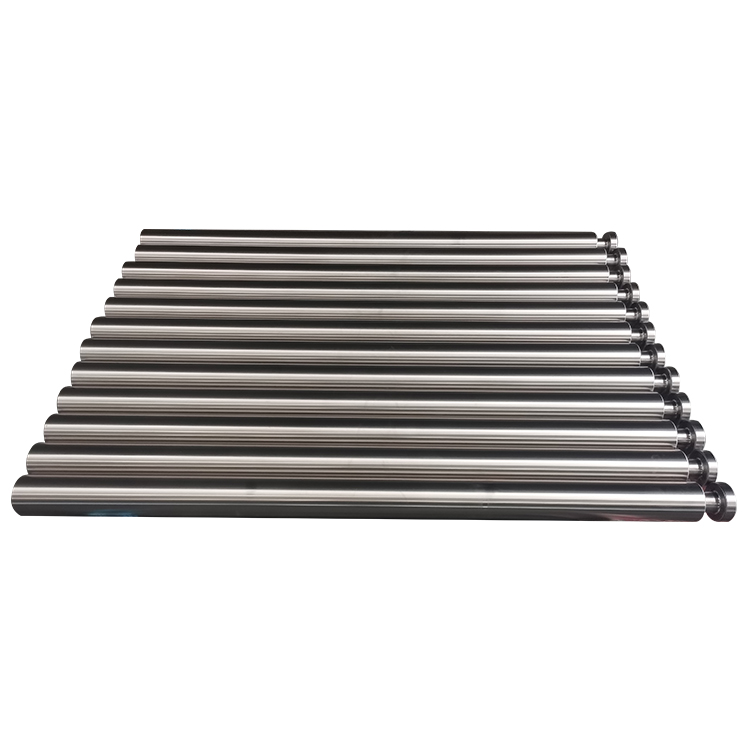
The application of straightening rollers covers multiple links in metallurgical processing. In the steel rolling workshop, they are installed at the end of the rolling line to correct the bending of steel bars, angle steels, and channel steels, ensuring that the products meet the dimensional tolerance requirements. In the heat treatment process, after quenching and tempering, metal workpieces are prone to thermal deformation, and straightening rollers can effectively correct these defects. For metal sheets used in automotive or aerospace fields, precision straightening rollers further improve surface flatness, reducing the risk of secondary deformation in subsequent stamping processes.
Proper operation and maintenance of straightening rollers are crucial to ensuring their performance and service life. During operation, it is necessary to adjust the pressure and spacing of the rollers according to the material, thickness, and deformation degree of the workpiece to avoid over-correction or insufficient correction. Regular inspection of the roller surface for wear, scratches, or cracks is essential; once defects are found, timely grinding or replacement is required. In addition, regular lubrication of the roller bearings and transmission mechanism can reduce friction and prevent failures caused by overheating.
 Contact person:Mr.Wu
 Phone:+86 18602539156
 Email:wuqi231138@126.com
This website uses cookies to ensure you get the best experience on our website.
 Español
 Pусский
 Indonesia
 Tiếng Việt


Comment
(0)