

In modern continuous production lines, whether it is high-speed printing equipment, precision film coating machinery, or efficient packaging assembly lines, stable and precise material transfer is the cornerstone of achieving automated production. As the core module that performs material conveying, tension control, and guidance functions in these devices, the performance of the Roller box directly determines the operational efficiency and product quality of the entire production line. The Roller box is not a single functional component, but a comprehensive functional unit that integrates precision bearings, high-precision roller shafts, advanced lubrication systems, and intelligent adjustment mechanisms, undertaking multiple missions from basic transmission to precise process control. As a key physical interface of material flow in the production line, the design level, manufacturing accuracy, and operational stability of the roll box system constitute an indispensable foundation for the efficient operation of modern continuous production equipment.
The core value of Roller Box lies in its scientific structural design, which enables precise fixation, smooth rotation, and efficient power transmission of the roller shaft, providing a stable and controllable working environment for roller pressing, ensuring the dimensional accuracy and surface quality of the processed products. The working principle of the roller box is closely related to the operation logic of the rolling equipment. The roller box is equipped with key components such as bearings, shaft sleeves, and seals. The roller shaft is connected and fixed to the main body of the roller box through bearings. The speed and torque transmitted by the power source are transmitted to the roller shaft through the roller box, driving it to rotate at high speed and smoothly, thereby extruding, rolling, forming or conveying materials.
In this process, the Roller Box needs to meet two core requirements simultaneously: firstly, accurately fixing the roller shaft to ensure its coaxiality and parallelism, avoiding roller shaft offset that may cause dimensional deviation and uneven surface of the processed product; The second is to reduce the friction loss during the rotation of the roller shaft, improve the efficiency of power transmission, and resist the erosion of internal components by material debris, dust, lubricating oil, etc., ensuring the long-term continuous operation of the equipment. Compared to other components of the rolling equipment, the working environment of the Roller Box is more complex, requiring long-term exposure to the radial pressure and axial impact force of the roller shaft, as well as the effects of dust and high temperature generated during material processing. Therefore, it has extremely high requirements for its structural strength, wear resistance, and sealing performance.
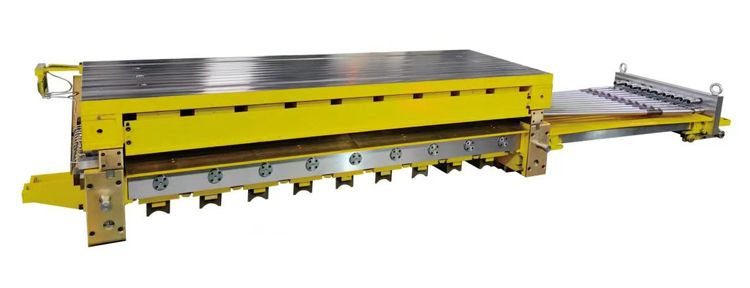
As the core component, the material selection, dynamic balance level, surface treatment process, and shape and position tolerance control of the roller shaft itself are all crucial. High rigidity and lightweight alloy steel or carbon fiber composite roller shafts, coupled with precise dynamic balance correction, ensure minimal vibration during high-speed rotation, avoiding damage to the material surface or resonance. The bearing system needs to withstand both radial loads and axial forces simultaneously. The selection of high-precision angular contact ball bearings or static pressure bearings, combined with adjustable pre tension installation methods, provides high stiffness, low friction, and zero clearance rotational support for the roller shaft. As a load-bearing frame, the rigidity, thermal stability, and processing accuracy (parallelism, perpendicularity, coaxiality) of the box structure directly determine whether multiple roller shafts can maintain accurate relative position relationships for a long time. Modern roller boxes also integrate precision adjustment mechanisms, such as eccentric sleeves, slider guides, or servo motor-driven linear modules, to achieve online fine-tuning of roller axis spacing, pressure, or angle. The resolution, repeatability, and rigidity of these adjustment mechanisms also determine the system's process control capability.
The wide adaptability of Roller Box enables it to meet the operational needs of rolling equipment in multiple industries, becoming an indispensable core component in industrial production and promoting efficient and standardized production in various industries. In the field of building materials processing, Roller Box is widely used in equipment such as tile rolling machines, gypsum board forming machines, cement rolling machines, etc. By accurately fixing the roller shaft and smoothly transmitting power, it ensures the dimensional accuracy and surface quality of building materials products, and improves production efficiency; In the field of metallurgical manufacturing, Roller Box is used in equipment such as rolling mills and aluminum plate rolling mills, which can withstand high-strength impacts and loads, ensure the rolling accuracy of steel and aluminum materials, and promote the standardized production of metallurgical products; In the field of plastic molding, Roller Box is suitable for equipment such as plastic rolling machines and film forming machines. With high-precision structural design, it ensures uniform thickness and smooth surface of plastic products, meeting the production needs of high-end plastic products.

 Contact person:Mr.Wu
 Phone:+86 18602539156
 Email:wuqi231138@126.com
This website uses cookies to ensure you get the best experience on our website.
 Español
 Pусский
 Indonesia
 Tiếng Việt


Comment
(0)