

Anyone running a metallurgical rolling mill knows how costly unexpected equipment wear and premature failure can be. A single worn-out rolling component can slow down production, create inconsistent finished material quality, and trigger unplanned downtime that hurts your overall profit margin. Many factory operators overlook one simple truth: the long lifespan of rolling equipment mainly depends on core technical specs rather than brand reputation alone, especially for key components like a professional industrial Roller box.
Why Roller Box Service Life Matters for Rolling Mill Operations
Roller box units serve as the core load-bearing and transmission components in wire rod and bar rolling lines. They support continuous high-speed rotation, bear repeated rolling impact forces, and maintain precise roller alignment during long production cycles. Unlike stationary industrial parts, these units work under dynamic, high-load, and high-temperature conditions every single working hour.
When key specifications fall below industrial standards, units suffer from rapid bearing wear, loose internal clearance, poor lubrication retention, and structural deformation. These small defects gradually evolve into severe failures, including roller jamming, dimensional rolling errors, and even complete line shutdown. For large-scale metallurgical factories that pursue stable mass production, extending the service life of core rolling components is a direct way to reduce operating costs and improve production efficiency.
Only by understanding and screening key technical indicators can procurement and maintenance teams select reliable equipment and maximize the working cycle of each standard roller box unit in continuous rolling scenarios.
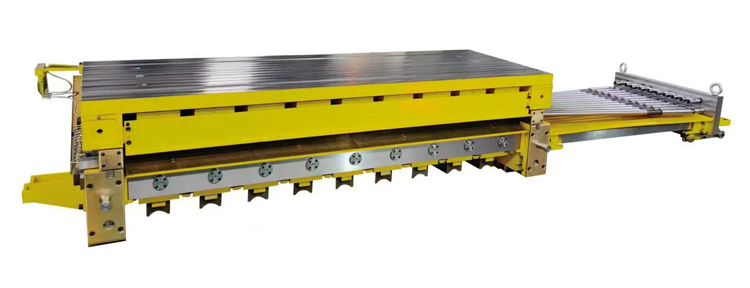
Key Technical Specifications That Define Roller Box Lifespan
1. Internal Bearing Grade and Load Capacity
Bearings are the most vulnerable and lifespan-determining parts inside roller box assemblies. Industrial rolling mills generate continuous radial and axial impact loads during operation. Ordinary low-precision bearings cannot withstand long-term cyclic pressure, leading to early fatigue peeling and rotational stagnation.
High-quality industrial units adopt high-precision heavy-duty rolling bearings with standardized dynamic load ratings. These professional bearing configurations maintain stable rotational precision under 24-hour continuous operation, effectively delaying metal fatigue and extending the overall service cycle. Bearing load capacity is always the primary reference index for evaluating durable roller box products in metallurgical industries.
2. Machining Tolerance and Assembly Precision
Overall assembly accuracy directly affects internal friction and operating stability. Low-precision machining leads to uneven gaps between shafts, bearings, and sealing components. Minor misalignment will cause eccentric rotation, increasing internal friction and vibration during high-speed rolling.
Qualified industrial products strictly control dimensional tolerance and concentricity errors. Precision machining ensures consistent internal clearance, uniform stress distribution, and smooth rotation. This eliminates abnormal wear caused by assembly deviations and maintains long-term operational stability for rolling line equipment.
3. Sealing Performance and Dustproof Grade
Metallurgical workshops are filled with metal oxide dust, water vapor, and cooling fluid splashes. Poor sealing allows external impurities to enter the internal structure, contaminating lubricating oil and abrading precision bearing surfaces. This is one of the most common hidden causes of shortened service life in rolling equipment.
Premium roller box units adopt multi-layer composite sealing structures and industrial dustproof grades. The optimized sealing design effectively isolates dust, moisture, and impurities, keeping internal lubrication clean and stable. Reliable sealing performance greatly reduces abnormal wear and avoids frequent oil replacement and internal component damage.
4. Structural Material and Heat Treatment Process
Shell and shaft material quality determines structural rigidity and deformation resistance. Inferior cast materials are prone to micro-deformation under long-term high temperature and heavy load, leading to internal component misalignment and accelerated wear.
High-grade industrial units use high-strength alloy cast steel with standardized annealing and quenching treatment. The mature heat treatment process eliminates internal material stress, improves overall structural stability, and ensures the unit maintains precise geometric shapes even after years of high-intensity operation.
Standard Technical Parameters for Long-Life Industrial Roller Box
The following industry-verified parameters clearly distinguish high-durability roller box units from ordinary low-grade products, providing authoritative reference for factory procurement and daily equipment inspection:
Parameter Item | Industrial Standard Value | Lifespan Benefit |
|---|---|---|
Bearing Precision Grade | P4 Industrial Precision | Low friction, anti-fatigue, long continuous service life |
Concentricity Tolerance | ≤0.01mm | No eccentric wear, stable high-speed rotation |
Dustproof Sealing Grade | IP65 | Prevents dust and coolant contamination internally |
Main Shaft Material | 40Cr Alloy Steel | High rigidity, anti-deformation under heavy load |
Design Working Lifespan | ≥30,000 Hours | Reduces replacement frequency and downtime loss |

FAQs About Industrial Roller Box Service Life and Specifications
1. What is the main reason for short roller box service life?
Most premature failures stem from unqualified sealing performance and low bearing precision, rather than normal aging. Poor sealing causes dust and coolant to pollute internal lubrication, while low-grade bearings produce severe fatigue wear. Selecting standard-specification roller box units can avoid over 80% of early failure issues.
2. How does machining precision affect long-term operation?
Tiny concentricity and tolerance errors will amplify during high-speed cyclic operation, causing eccentric rotation, uneven friction, and continuous vibration. High-precision machining maintains uniform internal stress, ensuring stable operation and greatly extending overall equipment lifespan.
3. Can daily maintenance further extend roller box service life?
Yes significantly. Regular lubricant replacement, dust cleaning, and sealing condition inspection can prevent impurity accumulation and dry friction. Scientific maintenance cooperates with original high-standard specifications to maximize the working cycle of industrial rolling components.
4. Is material quality more important than precision configuration?
Both factors are indispensable. High-quality materials ensure structural stability and deformation resistance, while precision configuration guarantees low internal wear. Only qualified material and precise machining together can form a long-lasting industrial roller box unit.
To sum up, the service life of industrial roller box units is determined by a combination of bearing grade, machining precision, sealing performance, and material technology. B-end purchasers and factory maintenance teams should focus on these core specifications instead of only comparing prices. Choosing standardized, high-precision units effectively reduces failure rates, cuts long-term maintenance costs, and keeps rolling mill production lines running stably and efficiently.
 Contact person:Mr.Wu
 Phone:+86 18602539156
 Email:wuqi231138@126.com
This website uses cookies to ensure you get the best experience on our website.
 Español
 Pусский
 Indonesia
 Tiếng Việt


Comment
(0)