

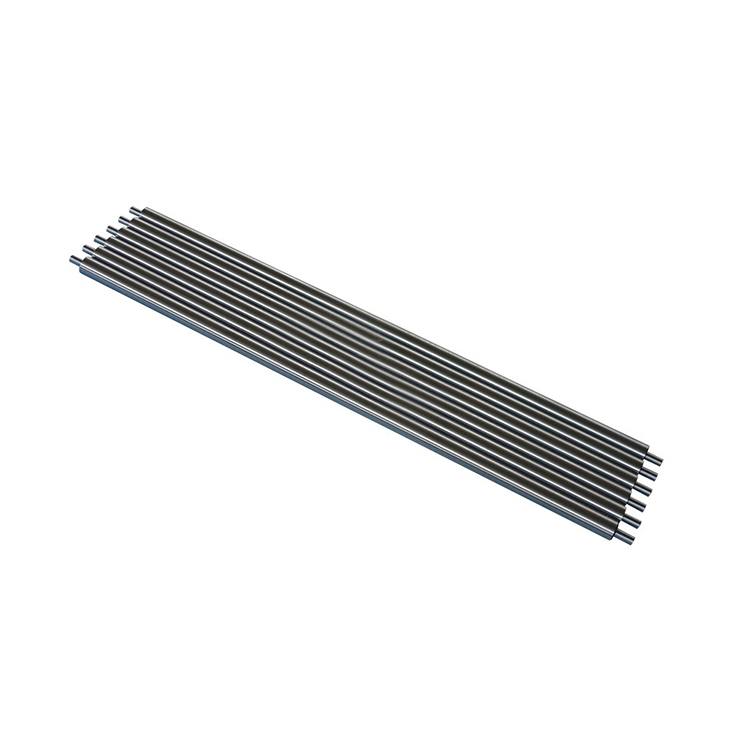
If you operate a steel rolling mill or manage metal processing production lines, you know how quickly Roller wear can disrupt your workflow. Frequent surface abrasion, scratch marks and fatigue damage force unplanned downtime, increase replacement costs, and lower finished strip quality. Choosing the right surface coating is one of the most effective ways to extend roller service life, and a high-quality coated intermediate roll can maintain stable performance under long-term high-load rolling conditions.
Why Wear Resistance Matters for Industrial Rolling Rollers
Rolling mill equipment operates under continuous high pressure, friction and temperature fluctuation. During metal strip processing, rollers constantly contact rigid metal surfaces, generating persistent abrasive wear and micro-impact fatigue. Without effective surface protection, ordinary roller surfaces degrade rapidly, resulting in uneven strip flatness, surface defects and inconsistent rolling precision.
Unlike traditional work rolls that directly contact raw strips, an intermediate roll undertakes transitional pressure distribution and deformation buffering. It endures repeated cyclic stress and subtle friction accumulation throughout production. This unique working mode makes surface wear the primary cause of performance degradation, making professional coating treatment indispensable for long-term industrial operation.
Top Surface Coatings for Optimizing Roller Wear Resistance
Different coating technologies deliver distinct hardness, friction resistance and thermal stability. Selecting a targeted coating according to rolling materials and load intensity can maximize cost performance and operational stability. The following parameter table compares mainstream industrial coatings applied on rolling equipment, providing clear data support for equipment upgrading and maintenance:
Coating Type | Surface Hardness (HV) | Specific Wear Rate (mm³/N·m) | Coating Thickness | Core Advantage | Best Application |
|---|---|---|---|---|---|
Tungsten Carbide Coating | 1100–1300 HV | 3.3×10⁻⁶ | 0.15–0.30 mm | Extreme abrasion resistance, high hardness | Heavy-duty cold rolling lines |
Nickel-Based Alloy Coating | 750–900 HV | 4.8×10⁻⁶ | 0.20–0.40 mm | Balanced toughness and wear resistance | Medium-load continuous rolling |
AlTiBN Ceramic Coating | 1800–2200 HV | 5.0×10⁻⁶ | 0.05–0.15 mm | High temperature resistance, anti-oxidation | High-temperature hot rolling mills |
ta-C Carbon Coating | 2500–3000 HV | 0.35×10⁻⁶ | 0.02–0.08 mm | Ultra-low friction coefficient | Precision thin strip rolling |
Coating Performance and Industrial Practicality Analysis
1. Tungsten Carbide Reinforced Coatings
Tungsten carbide coatings are the most widely adopted solution for heavy industrial rolling equipment. With excellent hardness and anti-abrasion properties, they effectively resist continuous metal friction and particle impact. This coating significantly reduces surface material loss and avoids early scratch defects. When applied on core transmission rollers, it stabilizes rolling precision and extends service cycle by 3 to 5 times compared with uncoated rollers.
2. High-Toughness Nickel-Based Coatings
Nickel-based alloy coatings focus on balanced performance. While pure hard coatings may crack under cyclic impact loads, this material maintains reliable surface toughness while ensuring wear resistance. It perfectly adapts to medium-load rolling scenarios with frequent start-stop cycles, effectively preventing coating peeling and fatigue failure caused by repeated stress changes.
3. High-Temperature Resistant Ceramic Coatings
Hot rolling production generates sustained high temperature, which easily softens ordinary coatings and accelerates surface oxidation. AlTiBN ceramic coatings feature outstanding thermal stability and anti-oxidation capacity. They maintain stable surface hardness and friction performance under 400℃ high-temperature working conditions, solving the wear failure problem caused by thermal softening of traditional protective layers.
4. Ultra-Low Friction ta-C Carbon Coatings
For precision thin-strip rolling, surface friction uniformity directly determines product surface quality. Ultra-thin ta-C carbon coatings deliver an extremely low wear rate and smooth surface texture. They minimize strip scratching and residual friction marks, making them ideal for high-precision stainless steel and aluminum strip production with strict surface requirements.
Key Coating Selection Principles for Rolling Production
Blindly pursuing ultra-high hardness does not guarantee the best operational effect. Production managers need to match coating performance with actual working conditions. Heavy-load cold rolling prioritizes abrasion resistance and adopts tungsten carbide coatings; cyclic variable-load production requires tough nickel-based coatings; high-temperature hot rolling must choose thermally stable ceramic coatings.
Reasonable coating matching can not only reduce surface wear, but also stabilize roller surface roughness, ensure consistent strip flatness, and lower overall equipment maintenance frequency throughout the production cycle.

FAQs About Intermediate Roll Surface Coating and Wear Resistance
1. How long can coated rolling rollers serve compared with uncoated ones?
Service life varies by coating type and load intensity. Under standard continuous rolling conditions, qualified coated rollers achieve 2–5 times longer service life than ordinary uncoated rollers, greatly reducing replacement frequency and production downtime loss.
2. Is ultra-hard coating always better for rolling equipment?
No. Excessively hard coatings lack flexibility and may peel or crack under frequent impact and vibration. Industrial rolling equipment requires balanced hardness and toughness to resist both abrasive wear and cyclic stress fatigue.
3. Which coating works best for high-temperature hot rolling lines?
AlTiBN ceramic coatings are the most suitable option. They maintain stable hardness and anti-oxidation performance under long-term high-temperature operation, avoiding rapid wear and surface failure caused by thermal softening of conventional coatings.
4. Can surface coatings eliminate roller wear completely?
No coating can fully eliminate mechanical wear, but high-performance industrial coatings can minimize wear rate, delay surface fatigue, and keep rolling precision stable for a longer period, achieving optimal production and maintenance balance.
At the end of the day, surface coating technology is the most cost-effective upgrade solution for modern rolling mills. Choosing a scientific and targeted coating type according to load, temperature and precision requirements can greatly improve the wear resistance and operational stability of industrial rollers. A well-coated roller not only cuts long-term maintenance costs, but also steadily improves finished product quality, bringing continuous economic benefits to metal processing enterprises.
 Contact person:Mr.Wu
 Phone:+86 18602539156
 Email:wuqi231138@126.com
This website uses cookies to ensure you get the best experience on our website.
 Español
 Pусский
 Indonesia
 Tiếng Việt


Comment
(0)