

What Is a work roll and Its Core Role in Steel Rolling
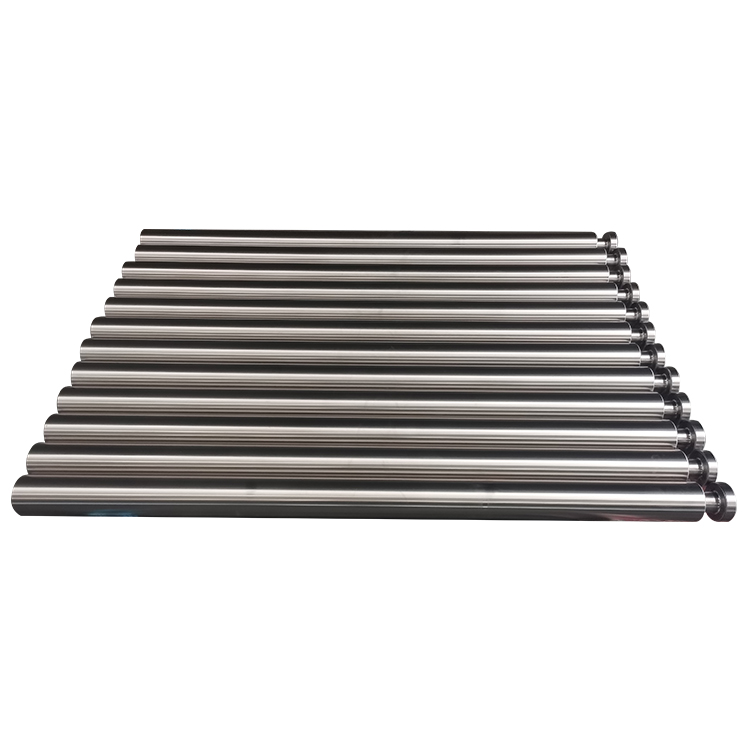
A work roll is the direct contact component that presses and shapes steel strips during hot and cold rolling processes. Unlike Backup Rolls that only provide support, the work roll touches the steel surface directly, determining the flatness, smoothness, and dimensional accuracy of the final steel product.
In normal production, a intact work roll maintains consistent surface roughness, uniform pressure distribution, and stable structural integrity. Once it suffers wear, cracks, or peeling, its surface uniformity breaks down. This abnormal state will be completely transferred to the steel strip during rolling, forming various surface defects that affect product qualification and market value.
Common Types of Work Roll Damage and Corresponding Steel Defects
Most steel surface quality problems stem from three typical work roll damage types. Each damage form leads to specific steel flaws, and the correlation is highly consistent in actual mill production. The following parameter table summarizes mainstream industrial detection data, showing the direct link between roll damage and steel surface issues.
Work Roll Damage & Steel Surface Defect Parameter Comparison Table
Work Roll Damage Type | Damage Characteristic Parameters | Resulting Steel Surface Defects | Defect Impact Level |
|---|---|---|---|
Uniform abrasive wear | Surface roughness Ra>1.8μm, roll crown loss 0.03–0.08mm | Dull surface, uneven gloss, slight thickness deviation | Medium (affects surface finishing) |
Local pitting & oxide peeling | Pit diameter 0.1–0.5mm, oxide film peeling area 5–15% | Regular surface pits, embedded fine scale particles | High (causes batch unqualified products) |
Surface scoring & micro cracks | Scratch depth 0.02–0.1mm, micro crack length 0.5–2mm | Continuous strip scratches, linear texture defects | Severe (leads to product scrapping) |
Edge spalling damage | Edge peeling width 1–3mm, uneven edge pressure | Steel edge wave, edge concave-convex marks | Medium-High (limits deep processing) |
How Different Damages Deteriorate Steel Quality
A worn work roll with excessive roughness will strip tiny metal particles and oxide fragments during rolling. These impurities are pressed firmly onto the soft steel surface under high rolling pressure, forming irreversible pits and rough textures. For hot rolling scenarios, high temperatures accelerate oxide film aging on the work roll surface; once the film peels off irregularly, the fragmented oxides will directly attach to the steel strip, causing scale defects that are hard to remove in subsequent processes.
For scratched or cracked work roll surfaces, the damage presents regular periodicity. As the roll rotates continuously, the flaws will repeatedly imprint on the moving steel strip, forming uniform periodic defects across the entire steel coil. This is why many steel mills find continuous defective sections instead of sporadic individual flaws after work roll damage occurs.
Root Causes of Work Roll Damage in Daily Production
Most work roll damage is not caused by sudden failures but accumulated minor production abnormalities. Summarizing on-site rolling mill operation data, three core factors dominate roll damage failure.
Unstable Rolling Pressure and Speed
Fluctuations in rolling pressure or excessive operating speed will cause uneven friction between the work roll and steel strip. Long-term asymmetric friction leads to local excessive wear, gradually destroying the original smooth roll profile and surface uniformity. Mills running at over 500 meters per minute are more prone to accelerated roll wear and instantaneous surface damage.
Poor Cooling and Lubrication Conditions
Insufficient cooling water flow or uneven lubricant coating will cause local overheating of the work roll. Thermal expansion and contraction generate thermal stress, triggering micro cracks and oxide film peeling. Good lubrication can reduce roll-steel friction by 30–40%, effectively delaying roll surface aging and damage.
Improper Maintenance and Grinding Cycles
Many manufacturers extend work roll service cycles blindly to save costs. Delayed regrinding fails to remove minor surface pits and scratches, making small damages expand rapidly under continuous rolling pressure. Regular precision grinding is the most effective way to maintain stable work roll surface quality.

Frequently Asked Questions About Damaged Work Roll and Steel Surface Quality
FAQ 1: Can slight work roll wear affect finished steel surface quality?
Yes. Even minor uniform wear that does not form obvious cracks or pits will increase roll surface roughness. This subtle change will reduce steel surface gloss and cause uneven finishing, failing the strict surface standards for automotive and appliance steel panels.
FAQ 2: How to quickly judge if steel defects come from a damaged work roll?
The most obvious feature is periodic defects. If steel surface flaws appear at fixed intervals consistent with the work roll circumference, the problem is definitely caused by roll surface damage. Other process failures rarely produce regular periodic defect patterns.
FAQ 3: How often should a work roll be inspected to avoid surface quality issues?
For continuous rolling production, daily surface roughness and visual inspection are necessary. Precision detection and regrinding should be performed every 7–10 working days. For high-precision steel production lines, the inspection cycle needs to be shortened to 3–5 days to eliminate hidden dangers in advance.
FAQ 4: Can damaged work roll be repaired instead of replaced?
Most minor and moderate damages can be fixed by professional precision grinding and surface polishing. Only severe deep cracking, large-area spalling or excessive dimensional deviation require roll replacement. Standard repair can restore over 95% of the original roll performance.
FAQ 5: What is the biggest production loss caused by neglected work roll damage?
Unattended roll damage will lead to batch defective products. A high-speed rolling mill can produce nearly 30 kilometers of flawed steel strip in one hour, resulting in massive material waste, increased rework costs, and delayed delivery schedules, greatly reducing overall production efficiency and profit margins.
Practical Tips to Avoid Steel Surface Defects From Roll Damage
First, build a standardized work roll inspection and maintenance system, adhering to regular grinding and real-time surface monitoring. Second, stabilize rolling parameters including pressure, speed, cooling and lubrication status to avoid abnormal friction and thermal stress. Third, train on-site operators to identify early roll damage signs, stopping production timely for inspection when periodic steel defects appear.
In short, the work roll is the key guarantee for high-quality steel surfaces. Most poor steel surface quality issues are avoidable through scientific roll management and daily maintenance. Paying small attention to roll conditions can save huge losses from batch product defects.
 Contact person:Mr.Wu
 Phone:+86 18602539156
 Email:wuqi231138@126.com
This website uses cookies to ensure you get the best experience on our website.
 Español
 Pусский
 Indonesia
 Tiếng Việt


Comment
(0)